Uncle Jack Finch
Uncle Jack Finch is Atticus Finch's younger brother, a doctor who lives outside Maycomb and visits the Finch family every Christmas. He is a head shorter than Atticus, the baby of the family, and younger than Aunt Alexandra. Though he and Aunt Alexandra look alike, Uncle Jack makes better use of his face: his sharp nose and chin never inspire wariness. He is one of the few men of science who never terrifies Scout, probably because he never behaves like a doctor. Whenever he performs a minor service for Jem and Scout, such as removing a splinter, he tells them exactly what he is going to do, gives an estimation of how much it will hurt, and explains the use of any tongs he employs. He keeps a yellow female cat named Rose Aylmer, whom he describes as one of the few women he can stand permanently, and he carries snapshots of her in his coat pocket. He jokes that she eats all the leftover fingers and ears from the hospital, a macabre humor that Scout recognizes as a tall tale.
Identity and Background
Uncle Jack is the baby of the Finch family, younger than both Atticus and Aunt Alexandra. He and Atticus are the only two men Scout and Jem ever see kiss each other, a gesture that strikes the children as funny. He arrives at Maycomb Junction by train every Christmas Eve, and the porter hands him two long packages that turn out to be the air rifles Atticus has written to ask him to buy for Jem and Scout. He is a doctor, but he never terrifies the children because he does not behave like a doctor. He has a distinctive smell, like a bottle of alcohol and something pleasantly sweet. He tells Scout that she is more like Atticus than her mother, and that she is growing out of her pants a little.
Key Actions and Objectives
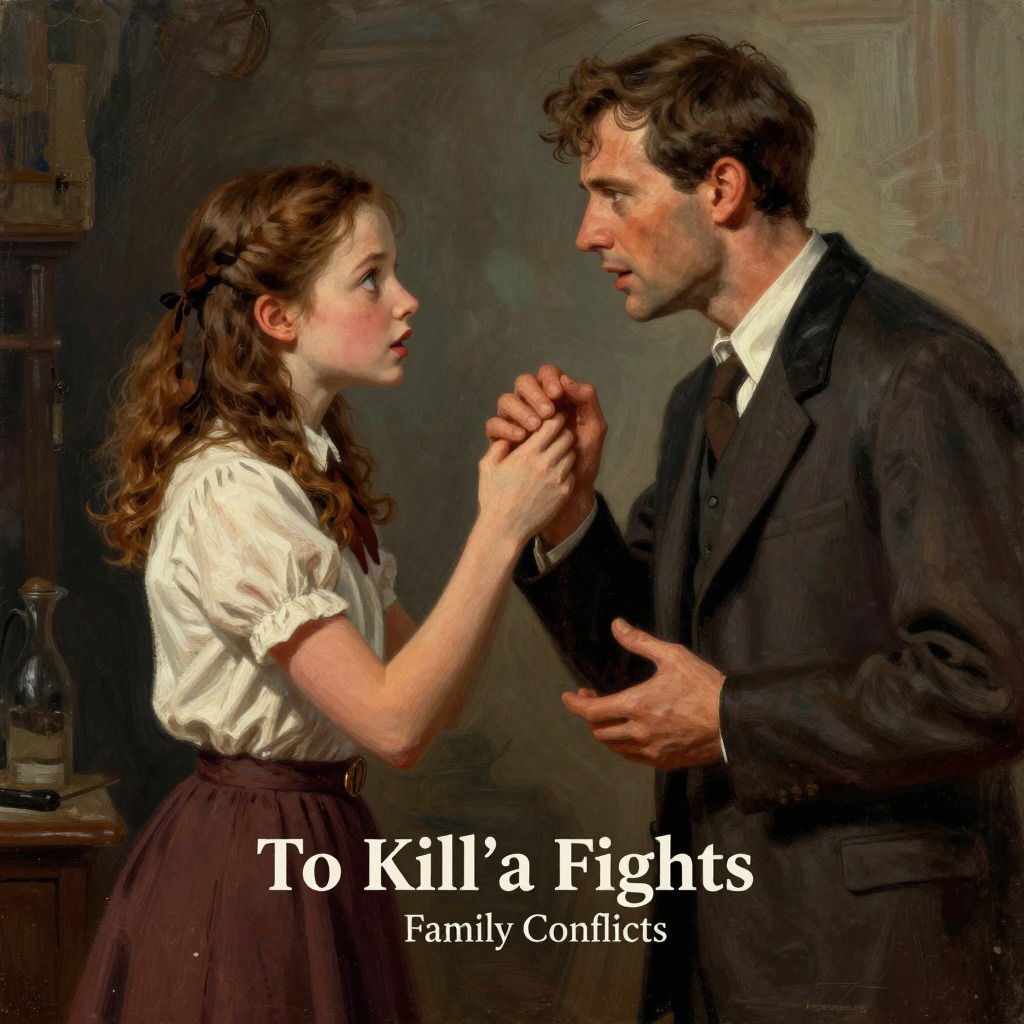
Uncle Jack's most significant action in the novel is his handling of Scout's fight with Francis Hancock at Finch's Landing. After Francis calls Atticus a "nigger-lover," Scout splits her knuckle to the bone on his front teeth. Uncle Jack pins Scout's arms to her sides and spanks her without first hearing her side of the story. He tells her he will not tolerate her using words like "damn" and "hell" except under extreme provocation. When Scout later confronts him in her room, she tells him he is not fair, that he never stopped to give her a chance to tell her side, and that Atticus always hears both sides when Jem and she fuss. Uncle Jack listens, learns that Francis called Atticus a "nigger-lover," and becomes furious, saying he has a good mind to go out there tonight. Scout makes him promise not to tell Atticus about the real reason for the fight, and he keeps that promise. He bandages her knuckles and entertains her with a tale about a funny nearsighted old gentleman who had a cat named Hodge and who counted all the cracks in the sidewalk when he went to town. He tells her she will have a very unladylike scar on her wedding-ring finger.
Relationships and Conflict
Uncle Jack's relationship with Scout is defined by this incident of punishment and subsequent reconciliation. After the spanking, Scout tells him she hates him and despises him and hopes he dies tomorrow. He later comes to her room, and she tells him he does not understand children much. He takes this lesson seriously. That night, he tells Atticus that he shall never marry, because he might have children. Atticus tells him he has a lot to learn, and Uncle Jack admits that Scout gave him his first lessons that afternoon, saying she told him how he should have treated her and that he is so sorry he romped on her. Atticus tells him that bad language is a stage all children go through, but that hotheadedness is not, and that Scout has got to learn to keep her head with what is in store for her. Uncle Jack does not break his promise to Scout, and she reflects that he was a prince of a fellow not to let her down. His relationship with Atticus is warm and affectionate, marked by the kiss on the cheek and their candid conversation about the Tom Robinson case, in which Atticus tells him the evidence boils down to a black man's word against the Ewells' and that he intends to jar the jury a bit.
Change and Ending
Uncle Jack undergoes a subtle but real change through his interaction with Scout. He arrives in Maycomb confident in his authority as an adult and a doctor, ready to correct Scout's language and behavior. After Scout's rebuke, he admits his error to Atticus and demonstrates a new humility. He keeps his promise to Scout, showing that he has learned from her lesson about fairness and listening. He does not appear again in the novel after this Christmas visit, but his influence lingers in Scout's understanding of adult fallibility and the importance of hearing both sides.
Narrative Role and Evaluation
Uncle Jack functions as a foil to Atticus in the novel's exploration of parenting and moral education. Where Atticus listens, explains, and trusts his children, Uncle Jack punishes first and asks questions later. His mistake and his willingness to learn from it illustrate the novel's broader theme that adults, even well-meaning ones, can fail children, and that children can teach adults important lessons about justice and empathy. He also serves as a conduit for the air rifles, which become the occasion for Atticus's famous lesson about it being a sin to kill a mockingbird, and for the Christmas visit that exposes Scout to the family's tensions over Atticus's defense of Tom Robinson. His conversation with Atticus about the case provides the reader with crucial information about the trial's stakes and Atticus's strategy.